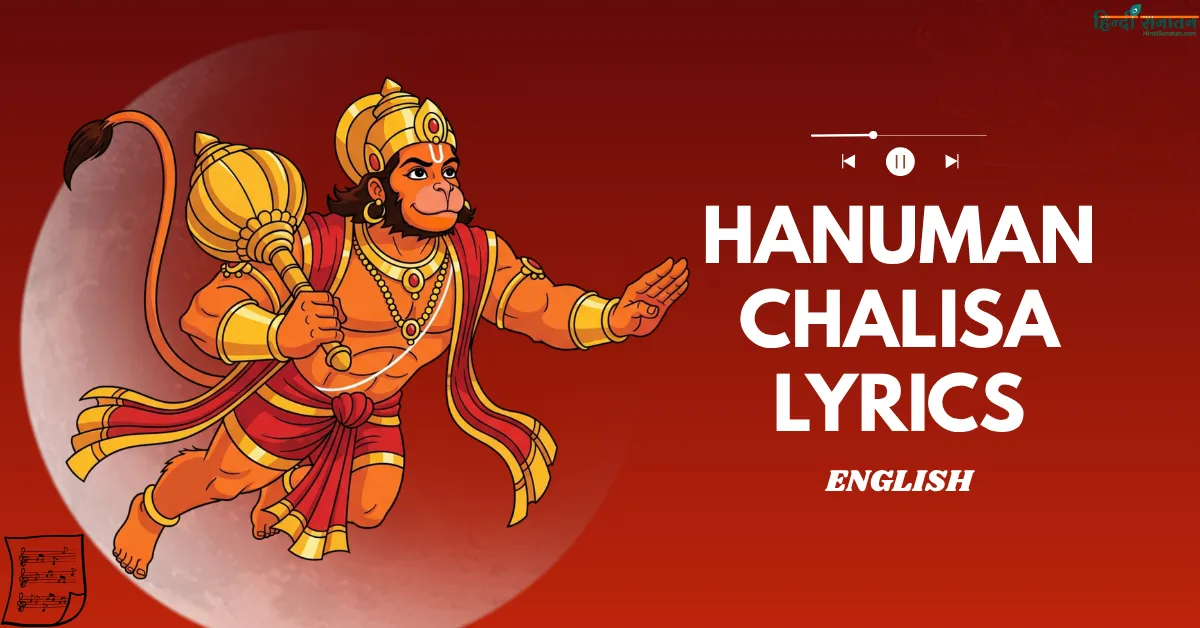
The Hanuman Chalisa is one of the most recited devotional hymns in Hinduism, composed by the great poet-saint Tulsidas in the 16th century. Written originally in Awadhi, it contains 40 verses (chaupais) glorifying Lord Hanuman- the devoted disciple of Lord Rama known for his strength, wisdom, and unwavering devotion (bhakti). Millions of devotees search daily for the Hanuman Chalisa in English, the Hanuman Chalisa PDF, and the Hanuman Chalisa lyrics in English with meaning so they can chant it correctly even without reading Devanagari script.
This article gives you the complete Hanuman Chalisa lyrics in English transliteration – the Shree Hanuman Chalisa in English, exactly as devotees around the world recite it – along with its meaning, benefits, and the correct way to read it.
Hanuman Chalisa Lyrics in English
|| Doha ||
Shri Guru Charan Saroj Raj,
Nijman Mukuru Sudhari |
Baranau Raghuvar Bimal Jasu,
Jo Dayak Phal Chari ||
Buddhiheen Tanu Janike,
Sumirau Pavan-Kumar |
Bal Buddhi Bidya Dehu Mohi,
Harahu Kales Bikar ||
|| Chaupai ||
Jai Hanuman Gyaan Gun Sagar |
Jai Kapees Tihun Lok Ujagar ||
Ram Doot Atulit Bal Dhama |
Anjani-Putra Pavansut Nama ||
Mahabeer Bikram Bajrangi |
Kumati Nivar Sumati Ke Sangi ||
Kanchan Baran Biraj Subesa |
Kanan Kundal Kunchit Kesa ||
Hath Bajra Au Dhvaja Biraje |
Kandhe Moonj Janeu Saje ||
Shankar Suvan Kesari Nandan |
Tej Pratap Maha Jag Vandan ||
Bidyavan Guni Ati Chatur |
Ram Kaj Karibe Ko Aatur ||
Prabhu Charitra Sunibe Ko Rasiya |
Ram Lakhan Sita Man Basiya ||
Sukshma Roop Dhari Siyahi Dikhava |
Bikat Roop Dhari Lanka Jarava ||
Bheem Roop Dhari Asur Sanhare |
Ramchandra Ke Kaj Sanvare ||
Lay Sajivan Lakhan Jiyaye |
Shri Raghubeer Harashi Ur Laye ||
Raghupati Keenhi Bahut Badai |
Tum Mam Priya Bharatahi Sam Bhai ||
Sahas Badan Tumharo Jas Gavai |
As Kahi Shripati Kanth Lagavai ||
Sanakadik Brahamadi Muneesa |
Narad Sarad Sahit Aheesa ||
Jam Kuber Digpal Jahan Te |
Kabi Kobid Kahi Sake Kahan Te ||
Tum Upkar Sugreevahin Keenha |
Ram Milay Raj Pad Deenha ||
Tumharo Mantra Bibhishan Mana |
Lankeshwar Bhaye Sab Jag Jana ||
Jug Sahasra Jojan Par Bhanu |
Leelyo Tahi Madhur Phal Janu ||
Prabhu Mudrika Meli Mukh Maahi |
Jaladhi Langhi Gaye Achraj Naahi ||
Durgam Kaj Jagat Ke Jete |
Sugam Anugrah Tumhre Tete ||
Ram Duare Tum Rakhvare |
Hot Na Agya Binu Paisare ||
Sab Sukh Lahai Tumhari Sarna |
Tum Rakshak Kahu Ko Dar Na ||
Aapan Tej Samharo Aapai |
Teenon Lok Haank Te Kampai ||
Bhoot Pisach Nikat Nahi Aavai |
Mahabeer Jab Naam Sunavai ||
Nasai Rog Hare Sab Peera |
Japat Nirantar Hanumat Beera ||
Sankat Te Hanuman Chhudavai |
Man Kram Bachan Dhyan Jo Lavai ||
Sab Par Ram Tapasvi Raja |
Tin Ke Kaj Sakal Tum Saja ||
Aur Manorath Jo Koi Lavai |
Soi Amit Jeevan Phal Pavai ||
Charon Jug Partap Tumhara |
Hai Parasiddha Jagat Ujiyara ||
Sadhu Sant Ke Tum Rakhvare |
Asur Nikandan Ram Dulare ||
Ashta Siddhi Nau Nidhi Ke Data |
As Bar Deen Janki Mata ||
Ram Rasayan Tumhre Pasa |
Sada Raho Raghupati Ke Dasa ||
Tumhre Bhajan Ram Ko Pavai |
Janam Janam Ke Dukh Bisravai ||
Ant Kaal Raghubar Pur Jai |
Jahan Janam Hari-Bhakt Kahai ||
Aur Devta Chitta Na Dharai |
Hanumat Sei Sarba Sukh Karai ||
Sankat Katai Mitai Sab Peera |
Jo Sumirai Hanumat Balbeera ||
Jai Jai Jai Hanuman Gosain |
Kripa Karahu Gurudev Ki Nain ||
Jo Sat Bar Path Kar Koi |
Chhutahi Bandi Maha Sukh Hoi ||
Jo Yeh Padhai Hanuman Chalisa |
Hoy Siddhi Sakhi Gaurisa ||
Tulsidas Sada Hari Chera |
Keejai Nath Hriday Mahan Dera ||
|| Doha ||
Pavan tanay Sankat Haran,
Mangal Moorti Roop |
Ram Lakhan Sita Sahit,
Hriday Basahu Sur Bhoop ||
Meaning of Hanuman Chalisa
The Hanuman Chalisa in English with meaning essentially describes:
- The two opening Dohas — the poet Tulsidas asks for blessings from his Guru and Lord Rama before starting the hymn, admitting his own limited intellect and seeking wisdom, strength, and knowledge from Pavan-Kumar (Hanuman, son of the Wind God).
- The 40 Chaupais — these praise Hanuman’s boundless strength, his devotion to Lord Rama, his heroic deeds (burning Lanka, carrying the Sanjeevani mountain, crossing the ocean), and his role as a protector who removes fear, disease, sorrow, and obstacles for true devotees.
- The closing Doha — a prayer asking Hanuman, the remover of troubles (Sankat Haran) and embodiment of auspiciousness, to reside in the devotee’s heart along with Ram, Lakshman, and Sita.
Many people specifically search for a Hanuman Chalisa English translation with word-by-word meaning; the essence in every verse is devotion (bhakti), courage (shakti), and surrender (saranagati) to Hanuman ji as the ideal disciple of Lord Rama.
Why Read the Hanuman Chalisa in English?
Many devotees are more comfortable reading in the Roman/English script than in Hindi’s Devanagari script. The Hanuman Chalisa in English transliteration lets you pronounce every word correctly while understanding it, which is why searches like “Hanuman Chalisa lyrics in English pdf”, “Hanuman Chalisa English translation”, and “Hanuman Chalisa in English with meaning” are so common among devotees worldwide, especially those living outside India.
According to tradition, reciting the Hanuman Chalisa mantra daily removes negative energy, cures ailments born of worry and fear, and brings courage and peace of mind. Many devotees keep a Hanuman Chalisa book or a printed Hanuman Chalisa PDF at their prayer altar and read it every day, especially on Tuesdays and Saturdays – days considered auspicious for worshipping Hanuman ji.
How to Read Hanuman Chalisa
- Sit facing east or towards a Hanuman/Ram idol or picture, ideally after a bath, in a clean and quiet place.
- Light a lamp or incense if possible — this is a common practice before chanting the Hanuman Chalisa mantra.
- Read the Doha first, then the 40 Chaupais in order, and close with the final Doha.
- Traditionally, devotees chant it once daily, and on Tuesdays/Saturdays some recite it 7 or 11 times for special wishes.
- Keep a Hanuman Chalisa PDF or printed copy handy so you don’t lose your place while chanting.
conclusion
May Hanuman ji, the remover of sorrows and embodiment of strength and devotion, bless all readers of this Hanuman Chalisa in English with courage, peace, and prosperity.
Frequently Searched Questions
Is the Hanuman Chalisa in English the same as the original?
The English version here is a phonetic transliteration of the original Awadhi/Hindi text, so you can pronounce the same words correctly even if you can’t read Devanagari script.
Who wrote the Hanuman Chalisa?
It was composed by the saint-poet Goswami Tulsidas, believed to have lived in the 16th century, and remains one of the most popular devotional texts dedicated to Lord Hanuman even today.
What are the benefits of reading the Hanuman Chalisa daily?
Devotees believe daily recitation brings courage, removes fear and negative energy, helps overcome obstacles (sankat), and brings mental peace and protection.
(Disclaimer: The lyrics provided on Hindisanatan.com are for educational purposes only. We hold the artists in high regard and do not endorse any form of illegal copying. If you enjoy this music, please support the artists. If you have any objections regarding this content, the copyright holders may contact us. Thank you for your understanding and cooperation.)